Plate 013 · Continental Europe
Bloodhound
寻血猎犬
“The nose that follows people for miles.”
- Origin
- Belgium · France · United Kingdom
- Ardennes (Saint-Hubert), later England
- Historical region — not an exact birthplace
- Traditionally traced to hounds kept by the monks of the Abbey of Saint-Hubert in the Ardennes; the modern breed was refined in England. The exact lineage is not fully documented.
- The point is a reference position for a historical region; it is not an exact birthplace.
- Era
- Medieval roots; modern breed shaped in England
- Today
- Mantrailing · Search and rescue · Companion
Under editorial review — sources listed below.
Then → Now
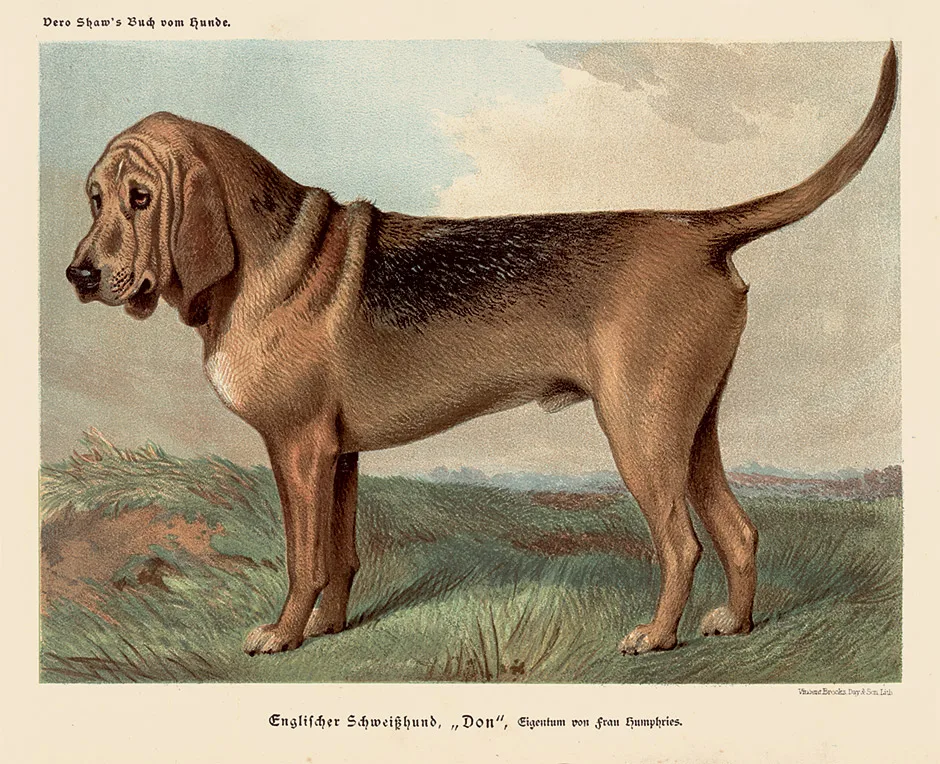 Then · 1880s
'Don', a Bloodhound owned by Mrs Humphries, a plate from the German edition of Vero Shaw's illustrated dog book (Leipzig, 1883–84).
Unknown artist, in Vero Shaw's Das illustrirte Buch vom Hunde (Leipzig, 1883–84) · Public domain · Wikimedia Commons
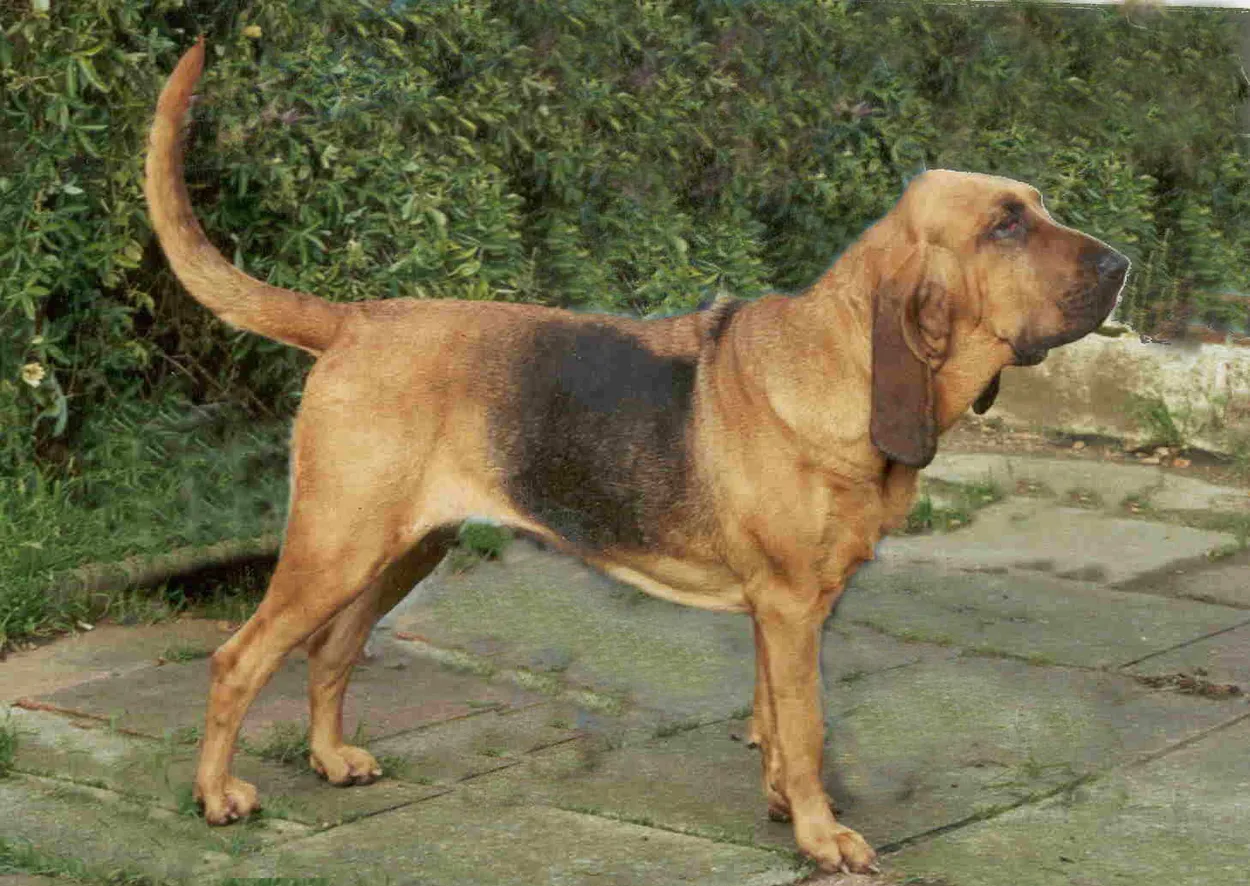 Now
NowCleanboot (talk) (Uploads) · Public domain · Wikimedia Commons
History
01 · Origin
Ardennes (Saint-Hubert), later England
A large scent hound traditionally linked to the hounds of the Abbey of Saint-Hubert in the Belgian Ardennes.
02 · Historical role
What it was bred for
Trailed deer and boar for medieval hunters, and later became famous for following the scent of people.
03 · Breed development
How it changed
It is recorded in England from the 14th century, and its modern breed standard was written there in 1896. In the 19th and 20th centuries it became the classic dog for searching for lost or wanted people.
04 · Today
Mantrailing · Search and rescue · Companion
A search-and-rescue and law-enforcement trailing dog, and a gentle, if stubborn, companion.
Personality
- Gentle
- Determined
- Independent
- Vocal tendency
General breed tendencies, not guarantees — individual dogs vary with genetics, training and environment. Ratings: this atlas’s editorial summary on a 1–5 scale, for rough comparison between breeds here — not a measurement or a standardised assessment.
- Size
- Large
- Lifespan
- 10–12 years
- Coat
- Short, dense coat with loose, wrinkled skin
Field note
In French and FCI usage the breed is called the Chien de Saint-Hubert, after the abbey linked to its origins.
Recognition & today
- AKC
- Hound Group
- Also recognized by
- FCI (as Chien de Saint-Hubert, Group 6, standard 84), The Kennel Club (UK)
- Popular in
- No reliable data
Best known as a tracking dog, used by police and law enforcement around the world. AKC registrations: ranked 59 among breeds in 2025.
Sources2 references
- Bloodhound — breed information — American Kennel Club
https://www.akc.org/dog-breeds/bloodhound/
Registry · accessed 2026-10-07 · Registry status and AKC group; AKC recognition 1885 per AKC "Breeds by Year Recognized". Used as a registry reference only.
- Bloodhound (encyclopedia overview) — Wikipedia
https://en.wikipedia.org/wiki/Bloodhound
Encyclopedia · accessed 2026-10-07 · Secondary overview; cross-check claims against primary breed-club sources.
Image credits
Unknown artist, in Vero Shaw's Das illustrirte Buch vom Hunde (Leipzig, 1883–84) · Public domain · Wikimedia Commons
Cleanboot (talk) (Uploads) · Public domain · Wikimedia Commons
Text is written by World Breeds from the references above; it does not reproduce registry descriptions. Location note: Traditionally traced to hounds kept by the monks of the Abbey of Saint-Hubert in the Ardennes; the modern breed was refined in England. The exact lineage is not fully documented.