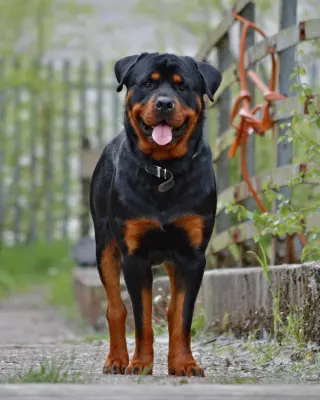
Plate 117 · Continental Europe
Bouvier des Flandres
法兰德斯畜牧犬
“The cow-herd of Flanders.”
- Origin
- Belgium · France
- Flanders (south-west Flanders and the northern French plain)
- Region of origin
- From Flanders, a medieval principality covering parts of today's France, Belgium and the Netherlands; the FCI lists Belgium and France as countries of origin. The marker is the reference point of West Flanders.
- The point marks the region the breed comes from, not an exact birthplace.
- Era
- Flemish farm dog from medieval times; unified standard 1936
- Today
- Herding dog · Working dog
Under editorial review — sources listed below.
History
01 · Origin
Flanders (south-west Flanders and the northern French plain)
A big, rough-coated Flemish farm dog that drove cattle, guarded the farm and pulled carts.
02 · Historical role
What it was bred for
Driving cattle, guarding farms, and pulling carts or turning churns.
03 · Breed development
How it changed
Into the early 20th century it existed in local variants (Paret, Moerman or Roeselare, and Briard); it was first exhibited in Brussels in 1910, and local clubs adopted standards in 1912–13. The First World War devastated its homeland; a war dog named Nic is counted as the founder of the breed after it. A joint French-Belgian standard came in 1936.
04 · Today
Herding dog · Working dog
A police, guard, herding and companion dog.
Personality
- Strong-willed
- Courageous
- Affectionate
- Calm
General breed tendencies, not guarantees — individual dogs vary with genetics, training and environment. Ratings: the AKC’s trait scores as its breed page gives them (the AKC’s 1–5 guidance for owners, not a measurement). Other profiles here use editorial ratings, a different source, so compare across them with care.
- Exercise
- Happiest busy: suits active owners who hike, jog or bike.
- Grooming
- Brush once or twice a week; clean the beard.
- Training
- Easy to train and keen to work; socialize early because of its prey drive.
Living with one
- Size
- Large
- Lifespan
- 10–12 years
- Coat
- Tousled, rough double coat with a beard; fawn, brindle, black or grey
Field note
In Belgium a Bouvier cannot become a show champion without also winning a prize in a working trial.
Recognition & today
- AKC
- Herding Group
- Also recognized by
- FCI (Group 1, standard 191)
- Popular in
- No reliable data
AKC: Herding Group, recognized 1931.
Both France and Belgium claim it as a native breed. AKC registrations: ranked 100 among breeds in 2025.
Sources3 references
- Bouvier des Flandres — breed information — American Kennel Club
https://www.akc.org/dog-breeds/bouvier-des-flandres/
Registry · accessed 2026-10-14 · Registry status, group, size, life expectancy and registration rank; history as the AKC tells it. Ratings: the AKC's own 1–5 owner-guidance trait scores as the page gives them (energy level, trainability, barking level, openness to strangers, good with other dogs), not measurements.
- Bouvier des Flandres — Wikipedia
https://en.wikipedia.org/wiki/Bouvier_des_Flandres
Encyclopedia · accessed 2026-10-14 · Flemish names and uses, the local types and 1912–13 standards, wartime losses, Nic, the 1936 Franco-Belgian standard.
- Bouvier des Flandres — FCI breed nomenclature — Fédération Cynologique Internationale
https://www.fci.be/en/nomenclature/BOUVIER-DES-FLANDRES-191.html
Kennel club · accessed 2026-10-14 · Countries of origin Belgium and France; Group 1, section "Cattledogs (except Swiss Cattledogs)"; accepted 1955.
Text is written by World Breeds from the references above; it does not reproduce registry descriptions. Location note: From Flanders, a medieval principality covering parts of today's France, Belgium and the Netherlands; the FCI lists Belgium and France as countries of origin. The marker is the reference point of West Flanders.