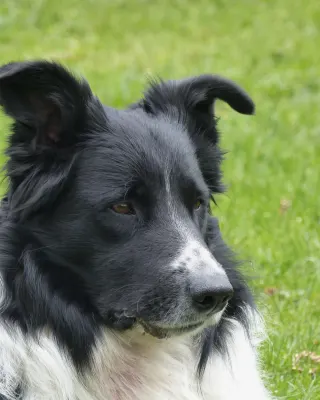
Plate 165 · Continental Europe
Mudi
穆迪犬
“Hungary's herding 'driver dog'.”
- Origin
- Hungary
- Region of origin
- A Hungarian herding dog; Dezső Fényes, director of the museum in Balassagyarmat, was one of the first to breed it separately. The marker is the reference point of Nógrád county, where the town lies.
- The point marks the region the breed comes from, not an exact birthplace.
- Era
- Separated around 1930; recognized 1936
- Today
- Herding dog · Companion
Under editorial review — sources listed below.
History
01 · Origin
Hungary
A medium-sized, wavy-coated Hungarian herding dog, a 'driver dog' still used with large flocks.
02 · Historical role
What it was bred for
Driving sheep and cattle, and guarding.
03 · Breed development
How it changed
Hungary's small herding dogs were long bred together. Around 1930 Dr Dezső Fényes began breeding the Mudi separately and named it; it was recognized in 1936. Many were lost in the Second World War.
04 · Today
Herding dog · Companion
Still a working herding dog in Hungary, and also a sports and companion dog.
Personality
- Loyal
- Intelligent
- Active
- Watchful
General breed tendencies, not guarantees — individual dogs vary with genetics, training and environment. Ratings: the AKC’s trait scores as its breed page gives them (the AKC’s 1–5 guidance for owners, not a measurement). Other profiles here use editorial ratings, a different source, so compare across them with care.
- Exercise
- Very energetic outdoors, calm indoors; excels at flyball and frisbee.
- Grooming
- Wash and wear: occasional combing and baths.
- Training
- Biddable and eager; a vocal, natural watchdog.
Living with one
- Size
- Medium
- Lifespan
- 12–14 years
- Coat
- Wavy to curly coat with short hair on the head and fronts of the legs; black, fawn, brown, grey, blue merle or white
Field note
It still works with Hungarian shepherds whose flocks can number 500 sheep.
Recognition & today
- AKC
- Herding Group
- Also recognized by
- FCI (Group 1, standard 238), The Kennel Club (UK, from 2025)
- Popular in
- No reliable data
AKC: Herding Group, recognized 2022.
Very rare: AKC estimates no more than a few thousand worldwide, most in Hungary, then Finland. AKC registrations: ranked 125 among breeds in 2025.
Sources3 references
- Mudi — breed information — American Kennel Club
https://www.akc.org/dog-breeds/mudi/
Registry · accessed 2026-10-14 · Registry status, group, size, life expectancy and registration rank; history as the AKC tells it. Ratings: the AKC's own 1–5 owner-guidance trait scores as the page gives them (energy level, trainability, barking level, openness to strangers, good with other dogs), not measurements.
- Mudi — Wikipedia
https://en.wikipedia.org/wiki/Mudi
Encyclopedia · accessed 2026-10-14 · Dezső Fényes and the breed's discovery (1936), wartime losses after its recognition, AKC (2022) and UK Kennel Club (2025) recognition.
- Mudi — FCI breed nomenclature — Fédération Cynologique Internationale
https://www.fci.be/en/nomenclature/MUDI-238.html
Kennel club · accessed 2026-10-14 · Country of origin Hungary; Group 1, section "Sheepdogs".
Text is written by World Breeds from the references above; it does not reproduce registry descriptions. Location note: A Hungarian herding dog; Dezső Fényes, director of the museum in Balassagyarmat, was one of the first to breed it separately. The marker is the reference point of Nógrád county, where the town lies.