Plate 076 · Continental Europe
Weimaraner
威玛猎犬
“The silver 'grey ghost' of a German duke's hunt.”
- Origin
- Germany
- Weimar, Thuringia
- Town or city of origin
- Associated with the court of Weimar; the earliest history is not well documented.
- The point marks the town the breed is linked to.
- Era
- 19th century
- Today
- Gundog · Companion
Under editorial review — sources listed below.
Then → Now
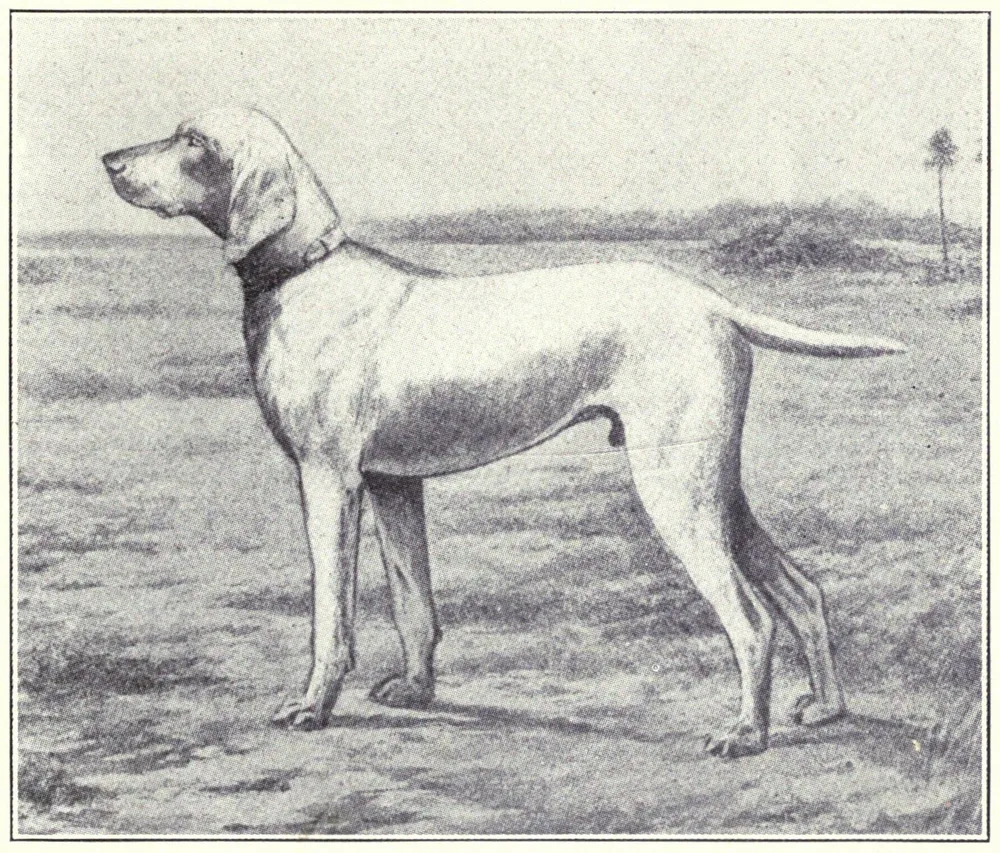 Then · 1915
The 'Pointer of Weimar' in W. E. Mason's Dogs of All Nations (1915), described as ranging 'from silver grizzle to mouse grizzle' — the colour that still defines the Weimaraner.
Unknown artist, in W. E. Mason's Dogs of All Nations (1915) · Public domain · Internet Archive (University of California Libraries scan)
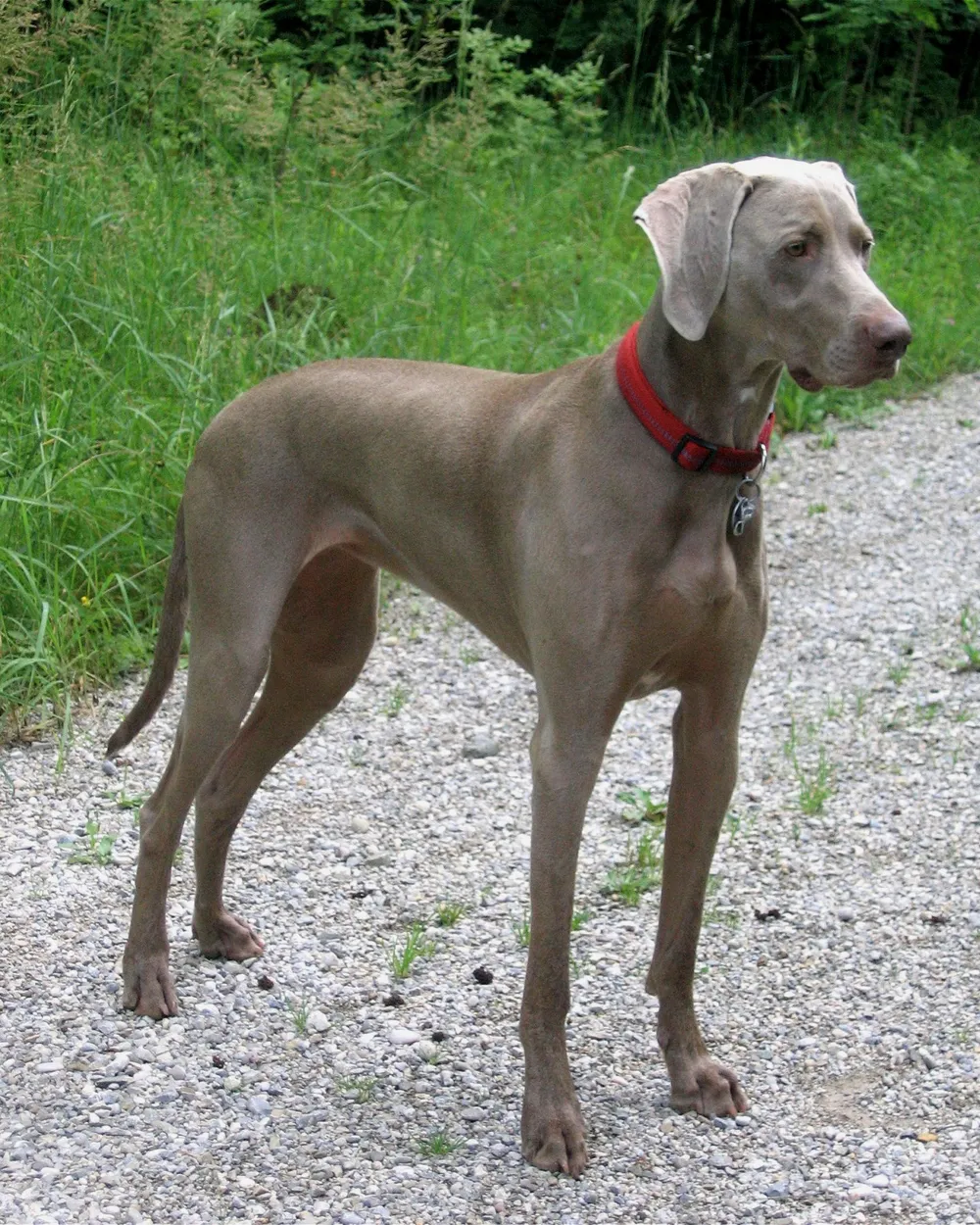 Now
NowHistory
01 · Origin
Weimar, Thuringia
A German hunting dog associated with the ducal court of Weimar.
02 · Historical role
What it was bred for
According to the AKC, bred for German noblemen to hunt big game such as bears and wolves; as those predators declined, it became an all-purpose hunting dog.
03 · Breed development
How it changed
German breeders kept the breed under tight control for many years. It reached the United States in the 1920s–30s and was recognised by the AKC in 1943.
04 · Today
Gundog · Companion
A fast, energetic hunting dog; in the United States also kept as a companion by active owners, though the German breed club holds that it is a hunting dog, not a companion.
Personality
- Energetic
- Friendly
- Fearless
- Obedient
- Attached to its people
General breed tendencies, not guarantees — individual dogs vary with genetics, training and environment. Ratings: this atlas’s editorial summary on a 1–5 scale, for rough comparison between breeds here — not a measurement or a standardised assessment.
- Size
- Large
- Lifespan
- 10–13 years
- Coat
- Short, smooth, mouse-grey to silver-grey coat
Field note
Weimaraner puppies are born with striped coats and blue eyes that usually turn amber or grey as they grow.
Recognition & today
- AKC
- Sporting Group
- Also recognized by
- FCI
- Popular in
- No reliable data
Its popularity in the United States took off in the 1950s and was boosted by William Wegman's Weimaraner portraits.
Sources2 references
- Weimaraner — breed information — American Kennel Club
https://www.akc.org/dog-breeds/weimaraner/
Registry · accessed 2026-10-07 · Registry status and AKC group; AKC recognition 1943 per AKC "Breeds by Year Recognized". Used as a registry reference only.
- Weimaraner (encyclopedia overview) — Wikipedia
https://en.wikipedia.org/wiki/Weimaraner
Encyclopedia · accessed 2026-10-07 · Secondary overview; cross-check claims against primary breed-club sources.
Image credits
Unknown artist, in W. E. Mason's Dogs of All Nations (1915) · Public domain · Internet Archive (University of California Libraries scan)
Text is written by World Breeds from the references above; it does not reproduce registry descriptions. Location note: Associated with the court of Weimar; the earliest history is not well documented.