Plate 012 · Mediterranean
Bichon Frise
比熊犬
“A royal lapdog that survived by learning circus tricks.”
- Origin
- France · Belgium
- Mediterranean, later developed in France and Belgium
- Historical region — not an exact birthplace
- The breed is linked to the Mediterranean 'barbichon' family and the Canary Islands (Bichon Tenerife), but the modern standard was written in France and Belgium. The marker represents the western Mediterranean.
- The point is a reference position for a historical region; it is not an exact birthplace.
- Era
- Renaissance-era type; recognized in France in 1933
- Today
- Companion · Toy breed
Under editorial review — sources listed below.
Historical context · Today
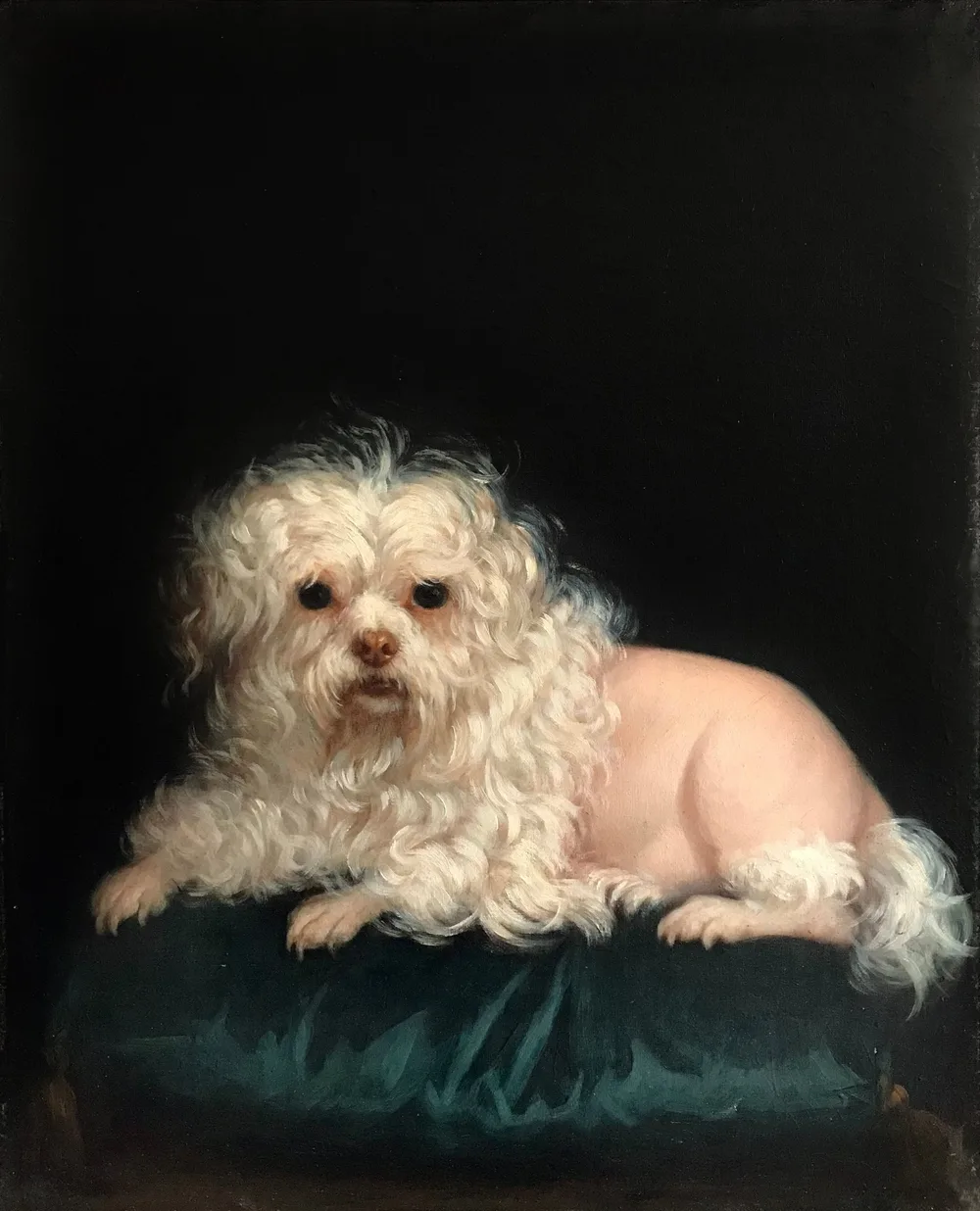 Context · 1887
'Bichon on a Green Cushion' (1887): a bichon-type lapdog in a lion trim. In 1887 'bichon' was a general name for small white companion dogs; the Bichon Frise standard came in 1933.
This image depicts a related historical dog type, not necessarily the modern breed.
Léontine Lemée · Public domain · Wikimedia Commons
 Now
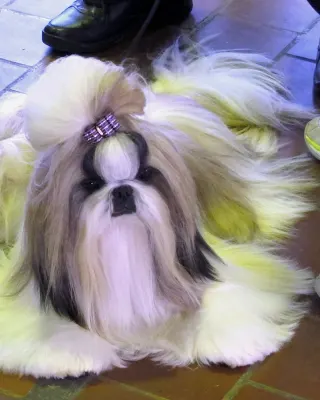
NowBernt Fransson · CC BY-SA · Wikimedia Commons
History
01 · Origin
Mediterranean, later developed in France and Belgium
Part of the Mediterranean bichon family of small white dogs carried by sailors and traders.
02 · Historical role
What it was bred for
Kept as a lapdog by European nobility, later a performing dog with street entertainers and circuses.
03 · Breed development
How it changed
Through the hard years of the two world wars a few fanciers in France and Belgium kept the type alive; the Société Centrale Canine recognized it in 1933; the AKC gives its name then as 'Bichon à poil frisé', while the FCI standard dates that name to 1978.
04 · Today
Companion · Toy breed
A cheerful companion dog, well suited to city life.
Personality
- Cheerful
- Playful
- Gentle
- Curious
- Social
General breed tendencies, not guarantees — individual dogs vary with genetics, training and environment. Ratings: this atlas’s editorial summary on a 1–5 scale, for rough comparison between breeds here — not a measurement or a standardised assessment.
- Size
- Small
- Lifespan
- 14–15 years
- Coat
- Curly, plush double coat, always white
Field note
After the French Revolution ended their days as aristocrats' lapdogs, bichons found a second life as performers with street entertainers, organ grinders and circuses.
Recognition & today
- AKC
- Non-Sporting Group
- Also recognized by
- FCI
- Popular in
- United States
A popular companion breed.
Sources2 references
- Bichon Frise — breed information — American Kennel Club
https://www.akc.org/dog-breeds/bichon-frise/
Registry · accessed 2026-10-06 · Used for registry status, AKC group and breed standard reference only.
- Bichon Frise (encyclopedia overview) — Wikipedia
https://en.wikipedia.org/wiki/Bichon_Frise
Encyclopedia · accessed 2026-10-06 · Secondary overview; cross-check claims against primary breed-club sources.
Image credits
Léontine Lemée · Public domain · Wikimedia Commons
Bernt Fransson · CC BY-SA · Wikimedia Commons
Text is written by World Breeds from the references above; it does not reproduce registry descriptions. Location note: The breed is linked to the Mediterranean 'barbichon' family and the Canary Islands (Bichon Tenerife), but the modern standard was written in France and Belgium. The marker represents the western Mediterranean.