Plate 061 · Continental Europe
Poodle
贵宾犬
“A water retriever whose practical haircut became high fashion.”
- Origin
- Germany · France
- Germany and France (Western Europe)
- Historical region — not an exact birthplace
- Country of origin is debated: the name comes from German 'Pudel', from a Low German word for splashing, while the FCI lists France. The marker sits between the two.
- The point is a reference position for a historical region; it is not an exact birthplace.
- Era
- At least several centuries old; recognised by kennel clubs from the 1870s
- Today
- Companion · Show dog · Dog sports
Under editorial review — sources listed below.
Then → Now
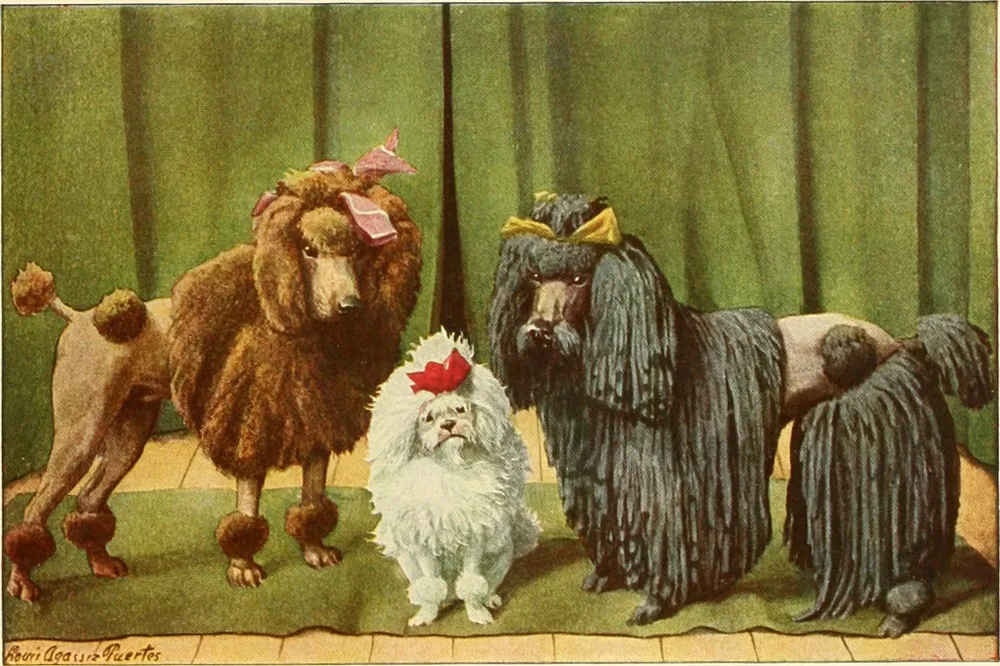 Then · 1919
Poodles from 'The Book of Dogs' (National Geographic, 1919), painted by Louis Agassiz Fuertes — including a corded coat, a style rarely seen today.
Louis Agassiz Fuertes, in National Geographic's The Book of Dogs (1919) · Public domain · Wikimedia Commons
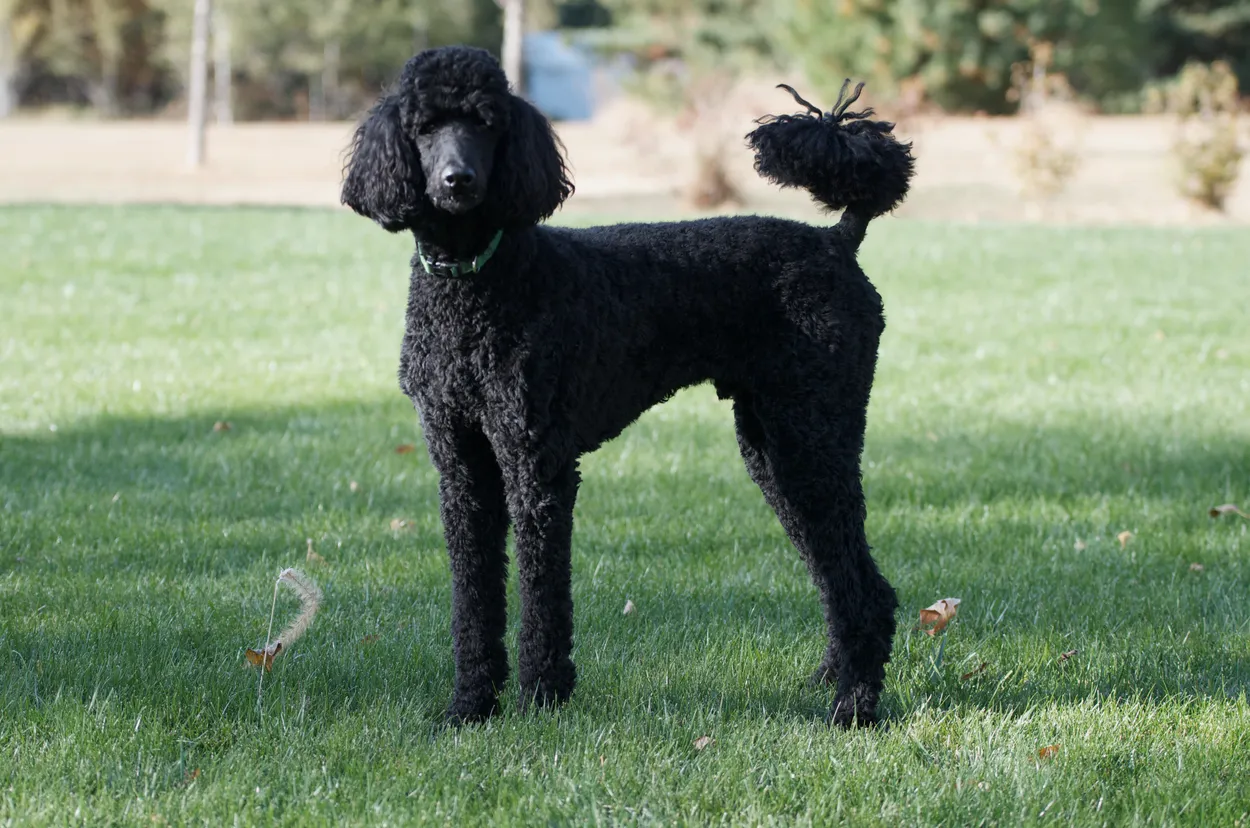 Now
NowStandard Poodle. The breed also comes in Miniature and Toy sizes.
Tim Wilson from Blaine, MN, USA · CC BY · Wikimedia Commons
History
01 · Origin
Germany and France (Western Europe)
A European water dog whose name derives from the German word for splashing in water.
02 · Historical role
What it was bred for
Retrieved waterfowl for hunters. The traditional clip left hair over joints and chest for warmth while lightening the coat for swimming.
03 · Breed development
How it changed
The breed spread across European courts and became a fashionable companion, especially in France. Selection for smaller sizes produced the Miniature and Toy varieties.
04 · Today
Companion · Show dog · Dog sports
An intelligent companion in three sizes, also seen in performance sports; the Toy form was first bred as a city companion.
Personality
- Intelligent
- Proud
- Active
- Trainable
General breed tendencies, not guarantees — individual dogs vary with genetics, training and environment. Ratings: this atlas’s editorial summary on a 1–5 scale, for rough comparison between breeds here — not a measurement or a standardised assessment.
- Size
- Medium
- Lifespan
- 10–18 years
- Coat
- Curly, low-shedding coat (size varies from toy to standard)
Field note
The elaborate show clip began as a working trim: bare legs for swimming, puffs of hair to keep the joints warm.
Recognition & today
- AKC
- Non-Sporting Group
- Also recognized by
- FCI, The Kennel Club (UK)
- Popular in
- United States
AKC places Standard and Miniature Poodles in the Non-Sporting Group and Toy Poodles in the Toy Group.
Ranked 6 in AKC registrations in 2025, and reported as the FCI's third most registered breed worldwide in 2012; a parent of many 'doodle' crosses.
In a 2025 online survey of dog owners (not a random sample), Poodles were the most often owned purebred in mainland China and Hong Kong.
Sources3 references
- Poodle (Standard) — breed information — American Kennel Club
https://www.akc.org/dog-breeds/poodle-standard/
Registry · accessed 2026-10-06 · Used for registry status, AKC group and breed standard reference only.
- Poodle breed standard — Fédération Cynologique Internationale
https://www.fci.be/en/nomenclature/POODLE-172.html
Kennel club · accessed 2026-10-06
- Poodle (encyclopedia overview) — Wikipedia
https://en.wikipedia.org/wiki/Poodle
Encyclopedia · accessed 2026-10-06 · Secondary overview; cross-check claims against primary breed-club sources.
Image credits
Louis Agassiz Fuertes, in National Geographic's The Book of Dogs (1919) · Public domain · Wikimedia Commons
Tim Wilson from Blaine, MN, USA · CC BY · Wikimedia Commons
Text is written by World Breeds from the references above; it does not reproduce registry descriptions. Location note: Country of origin is debated: the name comes from German 'Pudel', from a Low German word for splashing, while the FCI lists France. The marker sits between the two.