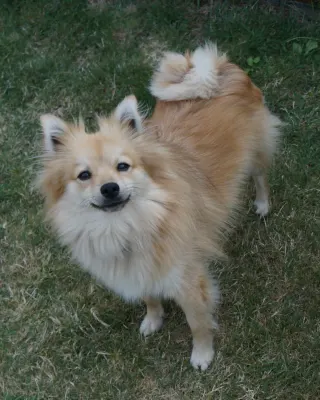
Plate 097 · The Americas
American Eskimo Dog
美国爱斯基摩犬
“A white spitz that walked tightropes in the American circus.”
- Origin
- United States
- United States (from German spitz dogs)
- Country of origin
- Developed in the United States from the white German spitz dogs of immigrant families; the marker is the country's reference point. Despite the name, Inuit peoples had no part in it.
- The point is a reference position in the country of origin.
- Era
- Late 19th to early 20th century
- Today
- Companion · Watchdog
Under editorial review — sources listed below.
History
01 · Origin
United States (from German spitz dogs)
A white spitz companion bred in three sizes, descended from the German spitz dogs of immigrants.
02 · Historical role
What it was bred for
A farm watchdog and companion, then a star of travelling circus acts.
03 · Breed development
How it changed
Immigrants brought white German spitz dogs to the United States; around the First World War the dogs were renamed. Circus acts made them popular: the AKC dates this from the late 19th century, Wikipedia names the 1930s and 1940s, and one with the Barnum and Bailey Circus was billed as the first dog to walk a tightrope.
04 · Today
Companion · Watchdog
A family companion and alert watchdog.
Personality
- Loyal
- Smart
- Versatile
- Alert
General breed tendencies, not guarantees — individual dogs vary with genetics, training and environment. Ratings: the AKC’s trait scores as its breed page gives them (the AKC’s 1–5 guidance for owners, not a measurement). Other profiles here use editorial ratings, a different source, so compare across them with care.
- Exercise
- Active and curious: needs lots of exercise and mental challenges, or it can become destructive.
- Grooming
- Sheds a lot: brush two or three times a week.
- Training
- Among the easiest breeds to train; early socialization.
Living with one
- Size
- Small
- Lifespan
- 13–15 years
- Coat
- Dense white double coat with a ruff around the neck; white or white with biscuit cream
Field note
It comes in three sizes: toy, miniature and standard.
Recognition & today
- AKC
- Non-Sporting Group
- Also recognized by
- United Kennel Club
- Popular in
- No reliable data
AKC: Non-Sporting Group, recognized 1994 per its breed facts (its history text and Wikipedia give 1995). Known as the American Spitz until around the First World War.
Sought out today by owners looking for a versatile, fun-loving companion. AKC registrations: ranked 124 among breeds in 2025.
Sources2 references
- American Eskimo Dog — breed information — American Kennel Club
https://www.akc.org/dog-breeds/american-eskimo-dog/
Registry · accessed 2026-10-14 · Registry status, group, size, life expectancy and registration rank; history as the AKC tells it. Ratings: the AKC's own 1–5 owner-guidance trait scores as the page gives them (energy level, trainability, barking level, openness to strangers, good with other dogs), not measurements.
- American Eskimo Dog — Wikipedia
https://en.wikipedia.org/wiki/American_Eskimo_Dog
Encyclopedia · accessed 2026-10-14 · German spitz ancestry, the wartime renaming, circus fame in the 1930s–40s, the three sizes.
Text is written by World Breeds from the references above; it does not reproduce registry descriptions. Location note: Developed in the United States from the white German spitz dogs of immigrant families; the marker is the country's reference point. Despite the name, Inuit peoples had no part in it.