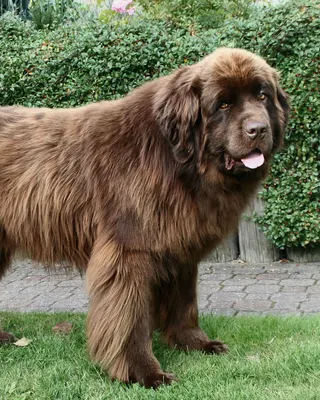
Plate 127 · The Americas
Chesapeake Bay Retriever
乞沙比克猎犬
“A duck dog whose story begins with two shipwrecked pups.”
- Origin
- United States
- Chesapeake Bay, Maryland
- Region of origin
- Developed around the Chesapeake Bay; the marker is Maryland's reference point. It is Maryland's state dog.
- The point marks the region the breed comes from, not an exact birthplace.
- Era
- From 1807
- Today
- Gun dog · Companion
Under editorial review — sources listed below.
History
01 · Origin
Chesapeake Bay, Maryland
A powerful American retriever with an oily, wavy coat, bred to retrieve ducks from the icy Chesapeake Bay.
02 · Historical role
What it was bred for
Retrieving waterfowl for market hunters and duck-club sportsmen; also used to pull fishing nets and rescue fishermen.
03 · Breed development
How it changed
In 1807 two Newfoundland-type pups, Sailor and Canton, were rescued at sea from a sinking English brig and brought to Maryland, where they were bred with local dogs. Wikipedia dates the AKC's recognition of a single type, the Chesapeake Bay Retriever, to 1918, while the AKC itself gives 1878 as the breed's recognition year; both dates are recorded here.
04 · Today
Gun dog · Companion
A hunting dog and a family companion.
Personality
- Bright
- Affectionate
- Sensitive
- Determined
General breed tendencies, not guarantees — individual dogs vary with genetics, training and environment. Ratings: the AKC’s trait scores as its breed page gives them (the AKC’s 1–5 guidance for owners, not a measurement). Other profiles here use editorial ratings, a different source, so compare across them with care.
- Exercise
- High energy: needs a job and plenty of exercise, such as hiking, running, hunting and swimming.
- Grooming
- Little grooming: a weekly brush; frequent baths strip the coat's oil.
- Training
- Very trainable; obedience training is a must.
Living with one
- Size
- Large
- Lifespan
- 10–13 years
- Coat
- Short, wavy, oily double coat that sheds water; brown, sedge or deadgrass
Field note
Its standard asks for a coat as close as possible to the colour of its working surroundings: brown, sedge or deadgrass.
Recognition & today
- AKC
- Sporting Group
- Also recognized by
- FCI (Group 8, standard 263)
- Popular in
- No reliable data
AKC: Sporting Group, recognized 1878.
Known as a duck dog of the Mid-Atlantic. AKC registrations: ranked 56 among breeds in 2025.
Sources3 references
- Chesapeake Bay Retriever — breed information — American Kennel Club
https://www.akc.org/dog-breeds/chesapeake-bay-retriever/
Registry · accessed 2026-10-14 · Registry status, group, size, life expectancy and registration rank; history as the AKC tells it. Ratings: the AKC's own 1–5 owner-guidance trait scores as the page gives them (energy level, trainability, barking level, openness to strangers, good with other dogs), not measurements.
- Chesapeake Bay Retriever — Wikipedia
https://en.wikipedia.org/wiki/Chesapeake_Bay_Retriever
Encyclopedia · accessed 2026-10-14 · Sailor and Canton (1807), George Law's account, the 1877 types, AKC recognition of one breed (1918), state dog of Maryland.
- Chesapeake Bay Retriever — FCI breed nomenclature — Fédération Cynologique Internationale
https://www.fci.be/en/nomenclature/CHESAPEAKE-BAY-RETRIEVER-263.html
Kennel club · accessed 2026-10-14 · Country of origin United States; Group 8, section "Retrievers"; accepted 1964.
Text is written by World Breeds from the references above; it does not reproduce registry descriptions. Location note: Developed around the Chesapeake Bay; the marker is Maryland's reference point. It is Maryland's state dog.