Plate 133 · Continental Europe
Dogue de Bordeaux
波尔多獒
“France's great mastiff of Bordeaux.”
- Origin
- France
- Bordeaux and Aquitaine
- Region of origin
- Known in south-western France around Bordeaux; the marker is the reference point of Gironde, the department of Bordeaux.
- The point marks the region the breed comes from, not an exact birthplace.
- Era
- Probable forebears described in the 14th century; first standard 1896
- Today
- Guard dog · Companion
Under editorial review — sources listed below.
History
01 · Origin
Bordeaux and Aquitaine
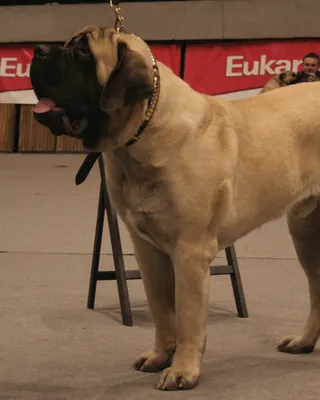
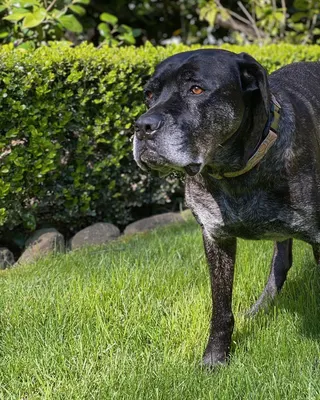
A massive, short-faced French mastiff with a fawn coat and a huge head.
02 · Historical role
What it was bred for
Guarding estates and herds, hunting large game, and in the past fighting.
03 · Breed development
How it changed
Theories link it to Roman war dogs, the Tibetan Mastiff or the Greek Molossus; none is proven. A bitch named Magenta won its class at the first Paris show in 1863, but a uniform type existed only from about 1920. Raymond Triquet's group rebuilt the breed in the 1960s and wrote a new standard in 1971.
04 · Today
Guard dog · Companion
A guardian and family companion.
Personality
- Loyal
- Courageous
- Affectionate
- Calm
General breed tendencies, not guarantees — individual dogs vary with genetics, training and environment. Ratings: the AKC’s trait scores as its breed page gives them (the AKC’s 1–5 guidance for owners, not a measurement). Other profiles here use editorial ratings, a different source, so compare across them with care.
- Exercise
- Moderate exercise; keep young dogs to low-impact activity until about 18 months, and take care in heat.
- Grooming
- Easy coat; wipe the facial wrinkles.
- Training
- Strong-willed but responsive: early socialization and consistent training.
Living with one
- Size
- Giant
- Lifespan
- 5–8 years
- Coat
- Short, fine, soft coat in shades of fawn to mahogany
Field note
In 1982, when an American writer introduced it to US dog fanciers, only about 600 were reportedly left worldwide.
Recognition & today
- AKC
- Working Group
- Also recognized by
- FCI (Group 2, standard 116), The Kennel Club (UK)
- Popular in
- No reliable data
AKC: Working Group, recognized 2008.
Rebuilt from the 1960s after it nearly died out. AKC registrations: ranked 95 among breeds in 2025.
Sources3 references
- Dogue de Bordeaux — breed information — American Kennel Club
https://www.akc.org/dog-breeds/dogue-de-bordeaux/
Registry · accessed 2026-10-14 · Registry status, group, size, life expectancy and registration rank; history as the AKC tells it. Ratings: the AKC's own 1–5 owner-guidance trait scores as the page gives them (energy level, trainability, barking level, openness to strangers, good with other dogs), not measurements.
- Dogue de Bordeaux — Wikipedia
https://en.wikipedia.org/wiki/Dogue_de_Bordeaux
Encyclopedia · accessed 2026-10-14 · Known around Bordeaux from the 14th century, unproven ancestry theories, Magenta at the 1863 Paris show, uniform type from about 1920, the Triquet-led rebuilding and the 1971 standard, the 1982 article and world numbers.
- Dogue de Bordeaux — FCI breed nomenclature — Fédération Cynologique Internationale
https://www.fci.be/en/nomenclature/DOGUE-DE-BORDEAUX-116.html
Kennel club · accessed 2026-10-14 · Country of origin France; Group 2, section "Molossian type".
Text is written by World Breeds from the references above; it does not reproduce registry descriptions. Location note: Known in south-western France around Bordeaux; the marker is the reference point of Gironde, the department of Bordeaux.