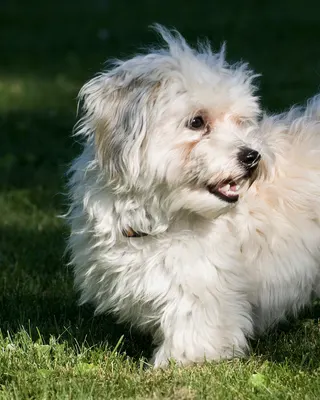
Plate 161 · Continental Europe
Löwchen
罗秦犬
“The 'little lion' once reported to be the world's rarest dog.”
- Origin
- France
- Western Europe (FCI: France)
- Country of origin
- Its birthplace is disputed: the name is German, the AKC suggests Germany, and the FCI lists France; the modern breed was saved by breeders in Belgium and Germany. The marker is France's reference point, following the FCI.
- The point is a reference position in the country of origin.
- Era
- Shown in art from the 15th–16th century; rebuilt from the 1940s
- Today
- Companion · Show dog
Under editorial review — sources listed below.
History
01 · Origin
Western Europe (FCI: France)
A small bichon-type companion shown in a 'lion' clip, once among the rarest dogs in the world.
02 · Historical role
What it was bred for
A companion of wealthy households.
03 · Breed development
How it changed
Small lion-clipped dogs appear in European art from the 16th century, though it is unclear whether all were this breed. In the 1940s Madame Bennert began a breeding programme to save the breed; in 1973 only 65 were reportedly registered worldwide. It reached Britain in 1968 and the United States in 1971.
04 · Today
Companion · Show dog
A companion and show dog, still rare.
Personality
- Affectionate
- Outgoing
- Positive
- Alert
General breed tendencies, not guarantees — individual dogs vary with genetics, training and environment. Ratings: the AKC’s trait scores as its breed page gives them (the AKC’s 1–5 guidance for owners, not a measurement). Other profiles here use editorial ratings, a different source, so compare across them with care.
- Exercise
- Lively but not a distance runner: play and long walks.
- Grooming
- Brush every few days; a trim every couple of months.
- Training
- Eager to please; teach it early not to bark at every sound.
Living with one
- Size
- Small
- Lifespan
- 13–15 years
- Coat
- Long, soft, wavy coat in any colour, traditionally clipped like a lion
Field note
In 1973 only 65 were reportedly registered anywhere in the world.
Recognition & today
- AKC
- Non-Sporting Group
- Also recognized by
- FCI (as Little Lion Dog, Group 9, standard 233), The Kennel Club (UK)
- Popular in
- No reliable data
AKC: Non-Sporting Group; Miscellaneous Class 1996, full recognition 1999.
Rare: its American breed club calls it one of the rarest breeds, in danger of extinction. AKC registrations: ranked 159 among breeds in 2025.
Sources3 references
- Löwchen — breed information — American Kennel Club
https://www.akc.org/dog-breeds/lowchen/
Registry · accessed 2026-10-14 · Registry status, group, size, life expectancy and registration rank; history as the AKC tells it. Ratings: the AKC's own 1–5 owner-guidance trait scores as the page gives them (energy level, trainability, barking level, openness to strangers, good with other dogs), not measurements.
- Löwchen — Wikipedia
https://en.wikipedia.org/wiki/L%C3%B6wchen
Encyclopedia · accessed 2026-10-14 · Obscure origin, depictions in art, late-19th-century breeders in Belgium, Germany and the Netherlands, Madame Bennert (1944), 65 registered dogs in 1973, arrival in Britain and the US.
- Little Lion Dog — FCI breed nomenclature — Fédération Cynologique Internationale
https://www.fci.be/en/nomenclature/LITTLE-LION-DOG-233.html
Kennel club · accessed 2026-10-14 · Country of origin France; Group 9, section "Bichons and related breeds"; accepted 1961.
Text is written by World Breeds from the references above; it does not reproduce registry descriptions. Location note: Its birthplace is disputed: the name is German, the AKC suggests Germany, and the FCI lists France; the modern breed was saved by breeders in Belgium and Germany. The marker is France's reference point, following the FCI.